

Relationship anxiety can quietly destroy connection before anything is actually wrong. That is what a lot of people do not understand. They think the issue is the delayed text, the missing good morning message, or the fact that their partner did not respond fast enough, warmly enough, or clearly enough.
But many times, the real issue started earlier. It started when fear got involved before truth did. Relationship anxiety has a way of making people react to what they are afraid something means instead of what actually happened.

Once that starts happening, the relationship begins carrying the weight of a story that may not even be true. That is how fear starts damaging connection. That is how overthinking starts poisoning peace and turns anxiety into a relationship problem instead of just a personal struggle.
Relationship Anxiety Can Start Before Anything Is Actually Wrong
A lot of people with relationship anxiety create pain before the other person even does anything. They want to text, communicate, and show love, but then anxiety steps in and starts flooding the moment with negative possibilities.
What if they are asleep? What if I bother them? What if they respond weird? What if I care more than they do? What if I text first and they do not match my energy? So instead of simply acting from honesty, they do nothing.
That matters because relationship anxiety does not just create bad feelings. It changes behavior. It turns simple moments into internal conflict and causes people to hesitate where they would normally be open and hold back where they would normally be honest.
That is where anxiety starts becoming relational. It no longer stays inside you. Now it starts shaping how you love, how you communicate, and how you interpret the other person. This is also how anxious fear starts feeding unhealthy relationship patterns if it goes unchecked.
How Relationship Anxiety Changes Your Behavior
This is the part people miss. The issue is not just that you feel anxious. The issue is that relationship anxiety starts telling you how to move.
Now you are no longer acting from honesty. You are acting from fear. You are not just being loving anymore. You are calculating, scanning, bracing, and trying to manage pain before it happens.
And in doing that, you stop showing up naturally. You stop texting first. You stop saying what you feel. You start monitoring tone, reading into delays, and treating neutral moments like warning signs.
That is how overthinking in relationships becomes destructive. It is not just mental noise. It becomes behavior, and that behavior starts interfering with trust, connection, and emotional steadiness.
The Good Morning Text and Relationship Anxiety
The good morning text is one of the clearest examples of relationship anxiety. Not because the text itself is that deep, but because people load so much meaning into it.
You wake up and think about your partner. You want to send the message. But instead of sending it, you start negotiating with your own anxiety. Maybe I should wait. Maybe if they cared, they would text first. Maybe I should not come on too strong. Maybe I will bother them. Maybe I need to see what they do.
So you do nothing. Then they do not text you either. Now the spiral starts, and the silence gets filled with assumptions. They do not care. They are not thinking about me. Something is off. Maybe they are pulling away. Maybe I am more invested than they are.
But maybe none of that is true. Maybe they are busy, in a meeting, dealing with a rushed morning, or simply have not picked up their phone yet. The problem is not always what happened. A lot of times, the real problem is the meaning anxiety assigned to what happened.
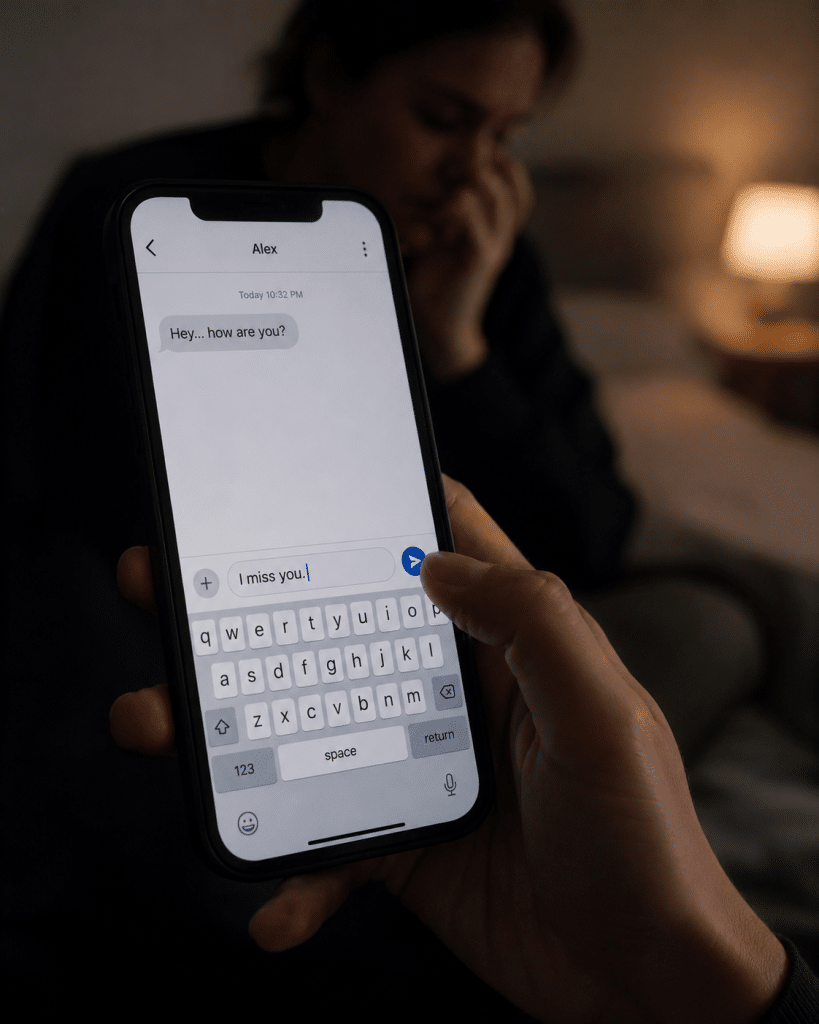
This is the trap. Relationship anxiety stops you from communicating, then punishes the other person for the silence your fear helped create. That will damage a relationship fast, and it is deeply unfair.
Because now the other person is being judged by a conclusion your anxiety made before communication even happened. They are being held responsible for the emotional atmosphere your fear created.
Why Relationship Anxiety Creates Negative Assumptions
Negative assumptions are one of the most destructive parts of relationship anxiety. Once fear starts filling in the blanks, your partner is no longer being judged by what they actually did. They are being judged by what your anxiety decided their behavior meant.
That creates strain fast. Silence gets treated like rejection. Delay gets treated like distance. Busyness gets treated like disinterest. A missed message gets treated like emotional neglect.
That is how someone starts making their partner responsible for a story the partner never wrote. And to be clear, this does not mean every concern is irrational. Sometimes something really is off. Sometimes communication patterns do matter. Sometimes intuition is picking up on something real.
But relationship anxiety does not wait well. It rushes, assigns intent too early, and treats fear like proof. That is why people confuse anxiety with discernment. But hypervigilance is not discernment, suspicion is not wisdom, and fear is not always telling the truth.

For more on how anxiety can distort communication and connection, see this Psychology Today article on anxiety’s impact on intimate relationships.
When Relationship Anxiety Turns Into Control
This is the harder truth. Relationship anxiety can turn into control. Not always in an obvious way, and not always in a malicious way, but it can still become controlling.
If you stop being honest because you are trying to force a certain response, that is control. If you withhold a text because you are testing whether they will send one first, that is control. If you become resentful because they did not behave according to the fear script in your head, that is control.
If you need them to constantly perform reassurance so you can feel okay, that puts them in the position of managing what you have not learned to regulate within yourself. That does not create intimacy. It creates pressure.
And over time, pressure like that makes connection heavy. It can make someone shut down, pull back, or feel like nothing they do is ever enough. That is part of why this fear-based pattern can connect to the same issues behind why people pull away in relationships.
When every interaction is loaded with hidden meaning, relationships stop feeling safe. They start feeling like emotional landmines. People do not relax into connection when they feel like everything is being interpreted through fear.
How to Stop Letting Relationship Anxiety Run the Relationship
The answer is not to stop caring. The answer is not to become cold. The answer is not to pretend you do not feel fear. The answer is to stop letting fear lead.
Start by asking yourself what actually happened. Then ask yourself what story you attached to it. Those are not always the same thing.
Maybe they responded late. That is what happened. Maybe you decided that meant you were not important. That is the story. Maybe they forgot to text first. That is what happened. Maybe you decided that meant they did not care. That is the story.
That distinction matters. The second step is direct communication. If you want to send the text, send the text. If you care, communicate. If you are loving, be loving. Do not turn your authenticity into a strategy game because anxiety is afraid of uncertainty.
The third step is emotional responsibility. Your partner can support you, but they cannot become the manager of every fear in your head. A healthy relationship can support healing, but it cannot replace the inner work of becoming more stable in yourself.
That inner steadiness is also what makes it possible to rebuild trust when anxiety, assumptions, and repeated misinterpretation have already done damage.
For a related perspective, see this Psychology Today article on what relationship anxiety may be signaling.
Final Thoughts on Relationship Anxiety
Relationship anxiety is real. It deserves compassion. But compassion does not mean giving it the steering wheel.
When relationship anxiety stays unchecked, it creates a cycle of hesitation, silence, assumption, resentment, and reaction. And the person on the other side ends up carrying emotional consequences for meanings they never intended, actions they never took, and stories they never told.
That is why this matters. You should be rooted enough in yourself that you can communicate without turning everything into a test. You should be stable enough in yourself that you can show care without needing perfect reassurance first.
You should also be honest enough with yourself to admit when the thing hurting the relationship is not just what your partner did. Sometimes it is what your fear decided it meant.

Do not make your partner pay for the stories your anxiety told you.
If you are tired of repeating the same relationship cycles and still not fully understanding what is underneath them, You Are the Pattern was written for you.
This book will help you name the patterns driving your relationships, understand where they come from, and start breaking what has been repeating for too long.
If this post hit something real in you, go deeper.
Get You Are the Pattern at TonyTaylorBooks.com
FAQ: Relationship Anxiety
What is relationship anxiety?
Relationship anxiety is fear, uncertainty, and overthinking that distort how a person interprets their partner’s behavior. It often causes someone to read too much into silence, delays, or unmet expectations.
How does relationship anxiety affect a relationship?
Relationship anxiety can damage communication, trust, and emotional safety by creating fear-based assumptions, emotional reactivity, and unhealthy pressure between partners.
Is overthinking in relationships a form of anxiety?
Often, yes. Overthinking in relationships is usually driven by fear of rejection, abandonment, uncertainty, or emotional loss.
Can relationship anxiety become controlling?
Yes. It can lead people to test, withhold, monitor, or expect their partner to constantly regulate their internal fear.
How do I stop relationship anxiety from damaging connection?
Start by separating facts from fear, communicating directly, regulating yourself, and refusing to assign meaning too quickly.